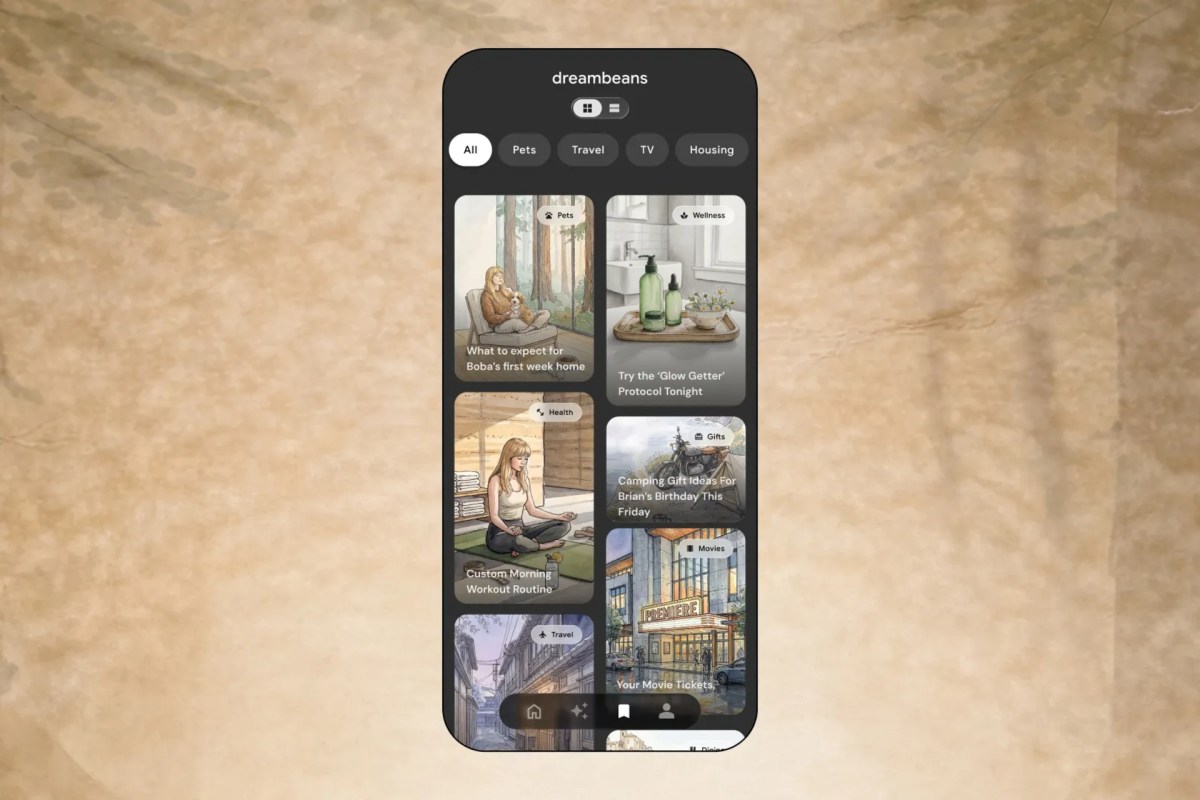
Google's Dreambeans is an experimental app that uses information from connected Google services, including Calendar, Gemini, Gmail, Photos, Search, and YouTube, to generate illustrated stories about users' interests and everyday lives without requiring a prompt. The app has now expanded to India with support for 13 local languages alongside English. The pitch is that a phone can tell you a story about yourself before you ask. The price is a deeper look into your inbox, calendar, and photo library.
Google says users can choose which services to connect, disconnect them at any time, and delete their Dreambeans data. Product manager Gozde Oznur also said that information deleted from underlying services is removed from the personalization system. Those assurances matter, but they put the burden on users to manage the settings of a feature they did not explicitly request. The report also notes that these services can contain sensitive personal information that some people may not want to share with an AI app for personalized content.
The product's limits are just as revealing. Users can pick only one language per story, which the report says could hurt appeal in a market where people often mix Hindi and English. The app can also surface painful memories, including stories about people who have died. Oznur acknowledged this risk and compared the fix to Google Photos controls that limit which memories appear. Asking users to filter their own grief after the fact is a weak answer to a product that proactively decides what to show them.
The usage numbers should give Google pause. Sensor Tower estimates that Dreambeans logged about 55,000 U.S. downloads since June, and that downloads fell 84 percent month over month to about 5,500 in October. Those figures are far below the first-month results for Meta's Muse, ChatGPT, Grok Bot, and Claude. Google may be treating India as a larger test, but a second market will not fix a retention problem in the first.
Google should keep the privacy controls strong, make mixed-language stories a priority before expanding further, and be transparent about how often sensitive memories surface. Until the company shows that people want a machine to narrate their lives from their own data, Dreambeans will remain a clever demo looking for a reason to exist.