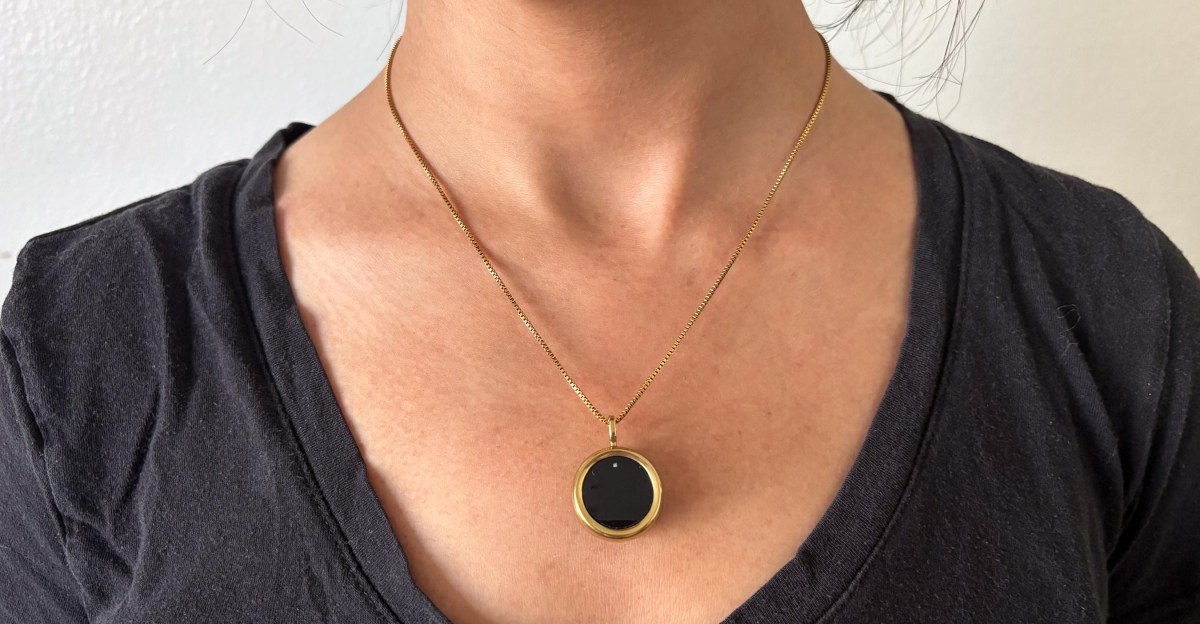
The author, a Los Angeles reviewer, tested The90's Gem, a UV-tracking necklace priced at $249 ($149 at the time of publication). The author wore it during an August outdoor party in Los Angeles, where temperatures reached the 90s. After about half an hour under a patio umbrella with a fan, the author felt exhausted, dizzy and nauseous, symptoms consistent with heat exhaustion. Around the same time, the Gem's app reported that UV exposure had risen considerably.
The author says the umbrella did not block UV radiation, which can be reflected or scattered by objects in the environment. The author also says a medication they take increases heat sensitivity, which may explain similar past episodes. The article states that the Gem did not diagnose anything.
The device has a sensor that measures UVA and UVB separately. The author notes that UVB is mainly linked to sunburn and vitamin D production, while UVA is linked to premature aging. The pendant is attached to a thin necklace, and the author reports that battery life lasted about a week, matching the advertised lifespan. The90 plans to release a hat clip and bag tag early next year.
The app shows metrics including estimated vitamin D production, circadian light benefits, nitric oxide-related benefits, cumulative UVA exposure and a daily Sun Score. The author says the estimates depend on a skin profile covering factors such as skin type, sunscreen and clothing, so they are predictions rather than direct measurements of the body's response. The company encourages a daily Sun Score of 90. The author found the individual measurements more useful than the score.
The author could not independently verify the sensor's accuracy. The readings changed as expected when the author moved between sun, shade and indoors. The app must stay running in the background on iPhone, the author says, because measurements are not stored on the sensor. The author has not tested Android.