The Download is a daily newsletter from MIT Technology Review that rounds up technology news. This edition covers several separate stories, and the material supports only brief, attributed summaries of each.
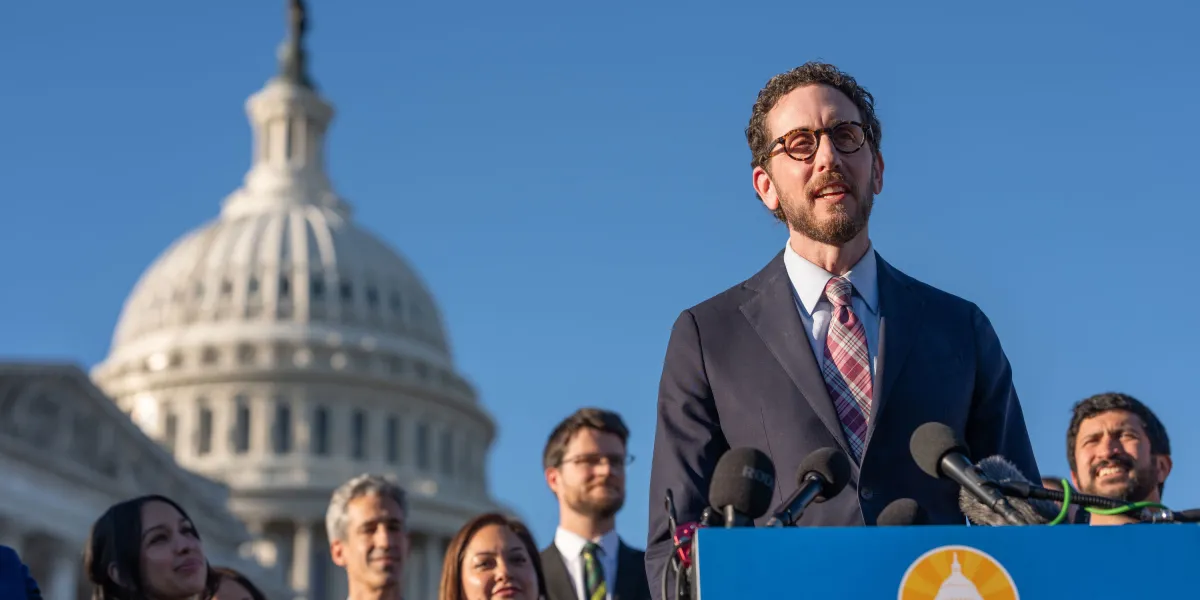
Scott Wiener, a former California state senator who authored legislation aimed at curbing the risks of advanced AI, won a tight congressional race for Nancy Pelosi's open San Francisco seat. In an interview with the newsletter's author, Wiener said "We need to slow this down," and described himself as "cautiously optimistic" about Congress's ability to rein in AI.
The newsletter's author reported from Ashburn, Virginia, part of Data Center Alley, which the author describes as the world's largest data center hub. The author writes that the real fault line in the backlash against data centers may be electricity, since drawing power from the grid and generating it onsite provoke different forms of pushback.
According to the newsletter, the FBI is investigating Nvidia CEO Jensen Huang's alleged affair. The newsletter reports that Trump says he doesn't think Huang needs to worry. Wired reports that Huang hired a PR firm known for handling sex scandals last year.
France has accused Iran of hacking supermarket fridges, and prosecutors are investigating the leaders of an Iranian cyber unit, according to NPR as cited in the newsletter.
The newsletter also cites reporting that the Iran war has triggered a drop in global emissions, with energy supply constraints as the main driver, though that decline will likely prove temporary.
The FDA has ordered GLP-1 drugs to carry warnings that they may increase the risk of vision loss, according to NBC News.
Other items in the roundup include Australia weighing criminal penalties for rogue AI, the Pentagon planning Moon patrol satellites that could launch in 2029, two US cities voting to ban Flock surveillance cameras, and a sci-fi novel winning the Booker Prize.