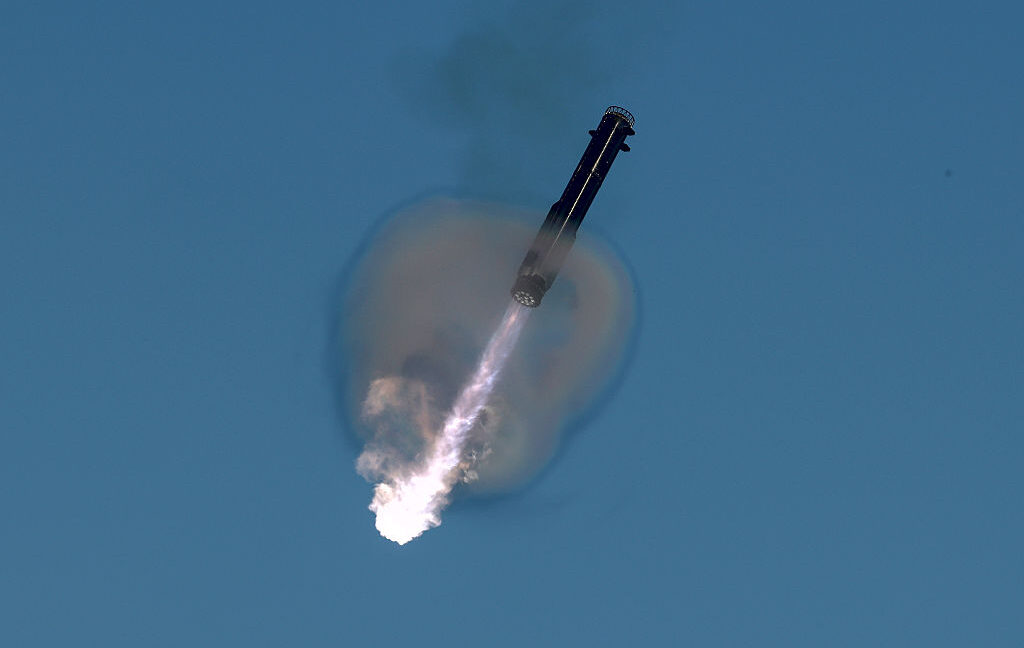
SpaceX launched Starship on its 15th test flight Friday from South Texas, the first in more than three years. The launch took place in the early evening under calm winds, according to Ars Technica.
The first stage flew as planned and released the upper stage over the Gulf of Mexico. The upper stage then lit its Raptor engines and reached a nominal orbit. The report describes this as the second time SpaceX has flown Starship into low-Earth orbit.
The first stage did not return as intended. Due to what the report calls an unspecified issue, the vehicle was commanded to divert into the Gulf instead of returning to the Starbase tower for a catch. It exploded on impact, and observers more than 10 miles away reported the blast.
The main objective, deploying 26 Starlink V3 satellites, appears to have succeeded. The report says the satellites, whose solar panels span 60 meters when fully deployed, reached orbit and will use onboard propulsion to raise their altitude.
SpaceX has not yet reflown a booster of the current version 3 design, so the booster recovery goal was not met. The company still plans to attempt a catch of the upper stage on Saturday. The report says the vehicle must pass in-orbit and reentry health checks first, because it will fly over parts of Mexico and the United States. If it passes, it would land at about 3:15 p.m. local time in Texas (21:15 UTC). If not, SpaceX has earlier options to de-orbit it into an ocean. The report says SpaceX has never attempted to catch an upper stage.
According to SpaceX, this flight applied lessons from the September test flight, including added tile retention mechanisms in high-risk areas and changes to address plasma flow paths behind the tiles. The company also said a large part of the heat shield uses a curved tile design that has reduced heating in the gaps between tiles.