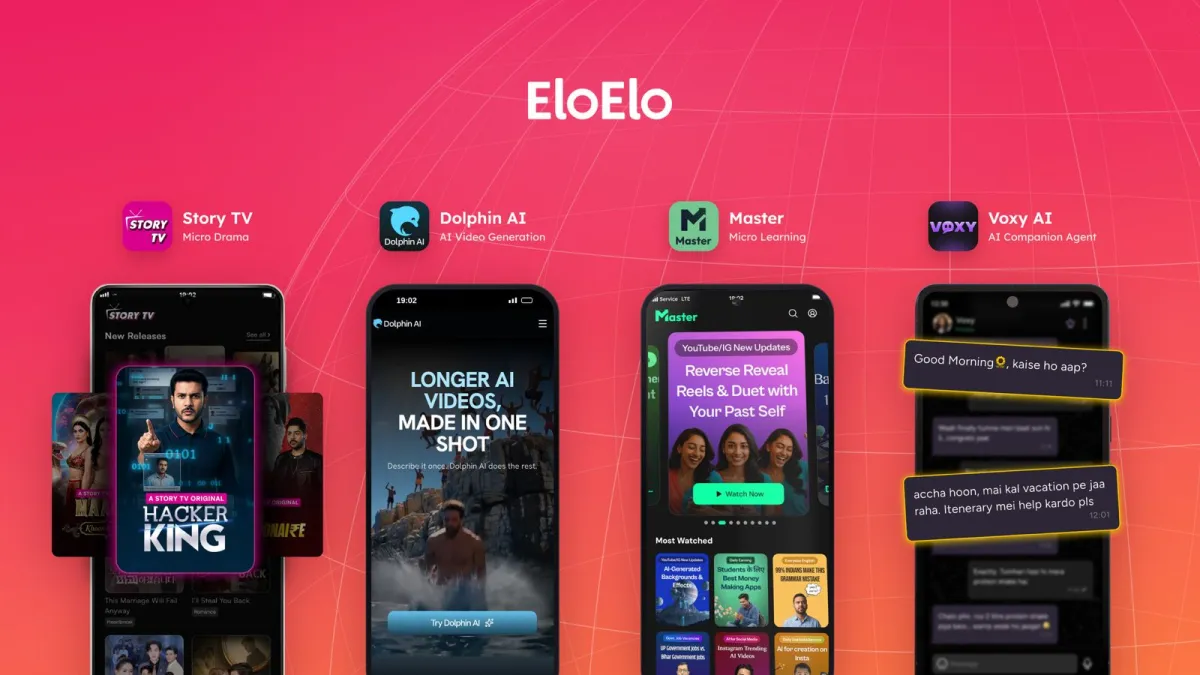
EloElo's $80 million Series C from Hornbill Capital and NBCUniversal is a strong signal that serialized short-form entertainment has found a market in India. The report says more than 118 million people watch microdramas every month, and that EloElo's Story TV app has over 33 million active users, according to analysts. Those numbers justify attention. They do not, on their own, prove a sustainable business.
The weak point is monetization. The report notes that users often stay for free content but few convert to paid users. A Redseer report indicates that more than 40 million people have paid for microdrama at least once, yet only 15 to 17 million pay monthly. A separate Ormax Media survey suggested that 72% of people have never paid. A market where most viewers never pay is a market where advertising and subscription revenue must both work, and the report itself says ad-supported revenue may not be as lucrative as subscriptions.
Founder Saurabh Pandey's argument that the next billion users will grow up on phone-based, snackable entertainment is plausible, and the report says users log 95 minutes a day on average. But engagement minutes are not the same as willingness to pay. Investors should ask how much of that time converts into revenue, and whether the company's partnership with Balaji Telefilms can keep quality high enough to pull viewers away from free platforms such as YouTube, Instagram, and TikTok.
The AI pitch deserves similar caution. EloElo's Dolphin tool is intended to speed up video creation and may later be sold for marketing and ads. Pandey's comparison of AI to a race car driven by a human showrunner is sensible, but it is a statement of belief rather than evidence of results. The report offers no figures showing that Dolphin has cut production costs or improved content performance.
My recommendation to the company is simple. Publish audited monetization data, separate the Story TV numbers from its other apps, and show that paid conversion is rising. The $500 million valuation rests on the assumption that scale will become revenue. Until the company demonstrates that conversion, a large user count should be read as potential, not proof.