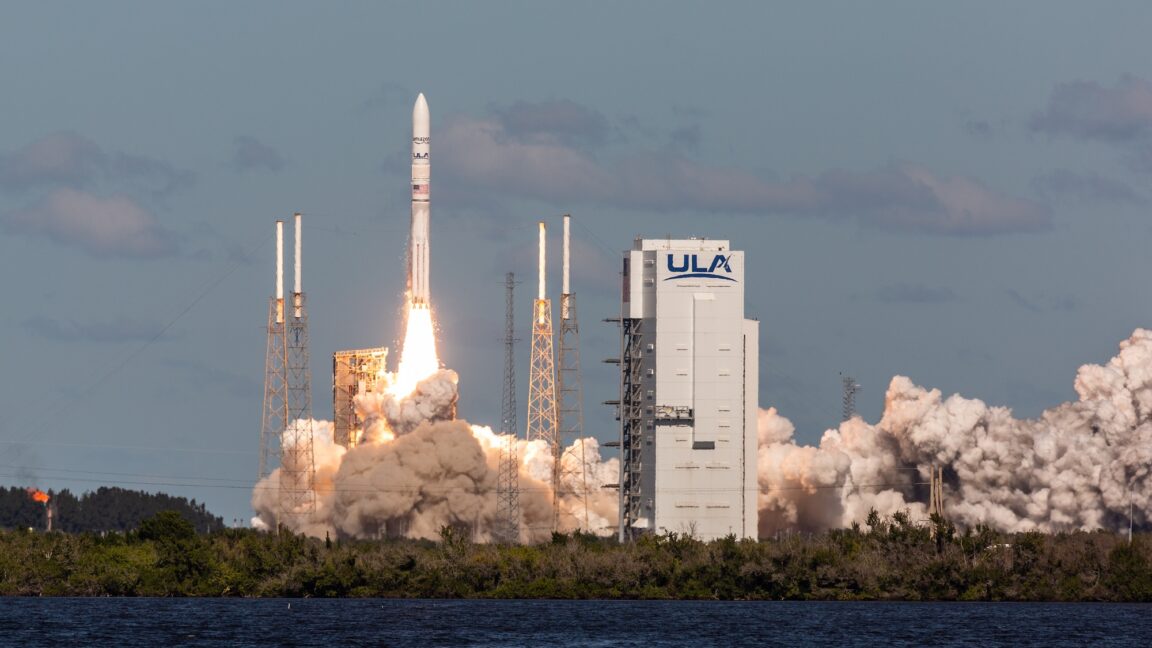
United Launch Alliance said Wednesday that inadequate fuel supply from the Vulcan rocket to its BE-4 engines caused the low booster thrust that led to the failure of a launch on Sunday. The company said work remains to determine the cause and that its findings are preliminary. ULA said the problem was in fuel delivery, "not from the performance of the engines."
Blue Origin, which builds the BE-4 engines, said it worked with ULA to review flight data. The company said it "identified that the low booster thrust was the result of inadequate fuel supply from the vehicle to the BE-4 engines." Blue Origin added that ULA "is a valued partner, and we look forward to Vulcan's return to flight."
The findings support an earlier Ars Technica report that the failure did not come from the main engines. Ars Technica also reported that the preliminary review points away from the Centaur V upper stage, a detail that matters to NASA because the agency has contracted ULA to use the Centaur V on the Space Launch System.
Ars Technica reported that the Vulcan failure carries implications for Blue Origin's New Glenn rocket, which uses a similar version of the BE-4 engine. New Glenn had a ground-test failure in May that Blue Origin attributed to a main oxygen valve on a BE-4 engine. Ars Technica reported that Blue Origin retrofitted that valve, and that the retrofit was not implicated in the Vulcan accident. The report said New Glenn could return to flight as soon as January.
Sunday's flight was Vulcan's fifth and its first outright mission failure. Two earlier flights had problems with the nozzles of the solid rocket boosters. The source says the new issue involves propellant management and plumbing that feeds liquid oxygen and methane to the BE-4 engines. Ars Technica reported that Vulcan will be offline for several months.