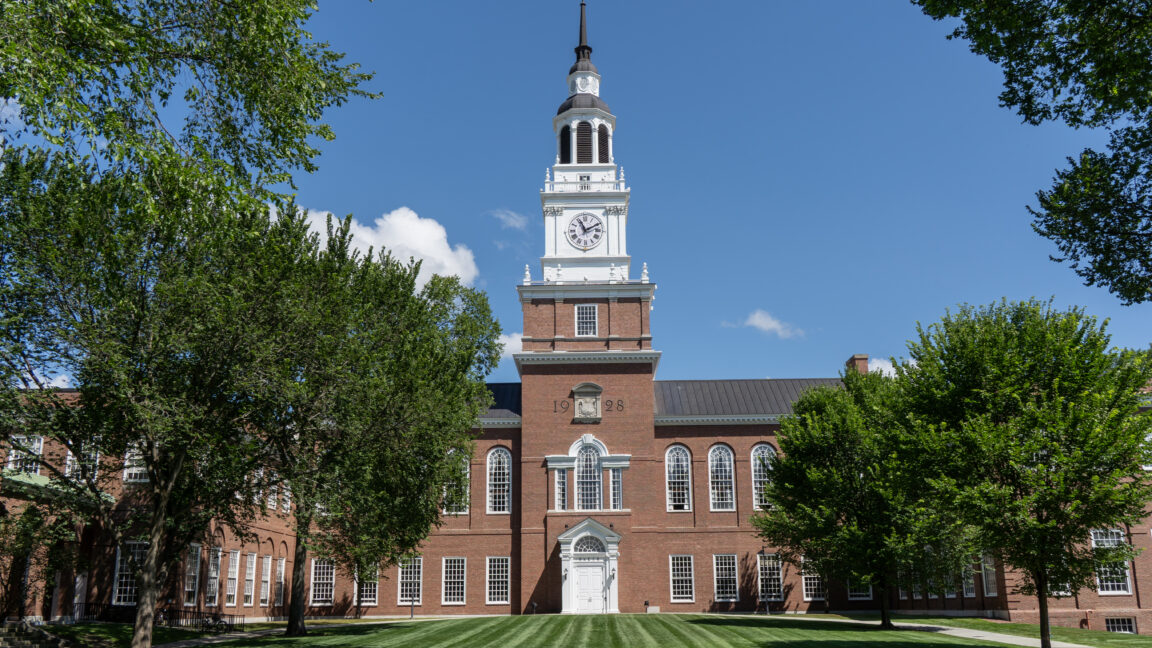
Dartmouth College provost Santiago Schnell resigned after an advisory committee found that he failed to disclose significant AI use in an academic paper and in a Washington Post op-ed, even though publishers required such disclosure, according to a report cited by Ars Technica.
The committee reviewed the Claude enterprise account Schnell used through Dartmouth. The logs show him using the chatbot to revise papers, find and fix bugs in code, and edit or generate figures. In one example, he asked Claude to act as a referee for a paper submitted to ChemSystemsChem. The committee said Schnell did not turn over logs from his personal LLM accounts related to the writings in question, and he did not agree to meet with the committee. The report uses the term "insufficient cooperation."
Schnell has described his AI use as editorial. He told Semafor he used chatbots "to refine a few arguments" and "check for grammatical errors." He told one journal editor that he "used AI as an editorial tool" and that he "did not understand that this type of AI-assisted editing required disclosure." The committee said his public statements may understate "the nature of the Provost's actual AI use" and that he "went beyond his other public descriptions of his use of AI in writing."
The logs also show Schnell asked an LLM to "make the corrections to the files, and the repo" and to generate new figures if needed. In another exchange, he uploaded a forthcoming article manuscript and asked Claude, "Are there many signatures of AI writing in this article?" He then submitted a revised manuscript that incorporated changes Claude suggested.
Dartmouth President Sian Leah Beilock said in announcing the resignation that leaders must model "the transparency and human judgment that we expect from our students and scholars." The university's AI-related activities continue, including a conference titled "What Must Remain Human?" that is scheduled to feature a student hackathon sponsored by Anthropic.