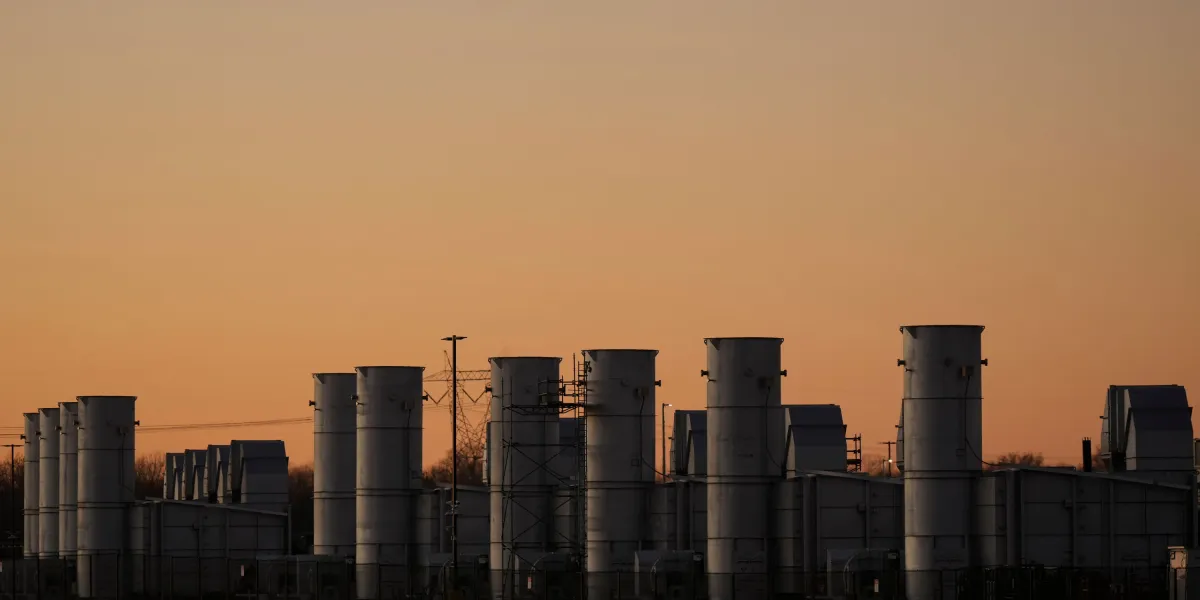
Data centers are increasingly building their own natural gas power plants instead of waiting to connect to the electric grid, according to MIT Technology Review. The report says grid connection approvals can take as long as a decade.
As of October 2026, data center developers had announced more than 100 behind-the-meter gas power plants at US facilities, with a combined planned capacity of over 115 gigawatts, according to data from Cleanview, a market intelligence company. The report says that is more than double California's peak power demand. Most of these announcements came after the start of 2025, and only a small fraction are under construction or operating.
Musfika Mishi, an associate at BloombergNEF, says "the biggest motivator for on-site power right now from data centers is speed." Building a plant is generally more expensive than grid hookup, but the report says developers are willing to pay a premium.
Brendan Pierpont, director of electricity at Energy Innovation, describes behind-the-meter gas as "a very expensive way to bridge" the five-to-seven-year gap until a grid connection is available. Mishi warns that operators may keep running the plants after the initial investment, which could lead to fossil fuel lock-in.
According to a BloombergNEF report cited in the article, if all planned US behind-the-meter gas plants for data centers are built, they could emit 345 million metric tons of carbon dioxide equivalent each year by 2035. That is 152 million metric tons more than if the same data centers drew power from the US grid. Mishi says few of the planned plants will use combined-cycle turbines, which means they will likely produce more emissions than other gas resources.
Matthias Fripp, director of global policy research at Energy Innovation, says off-grid data centers do not protect prices for other customers. He says higher natural gas demand could raise prices for households that use gas for heating and cooking, and that the effect may reach electricity prices.