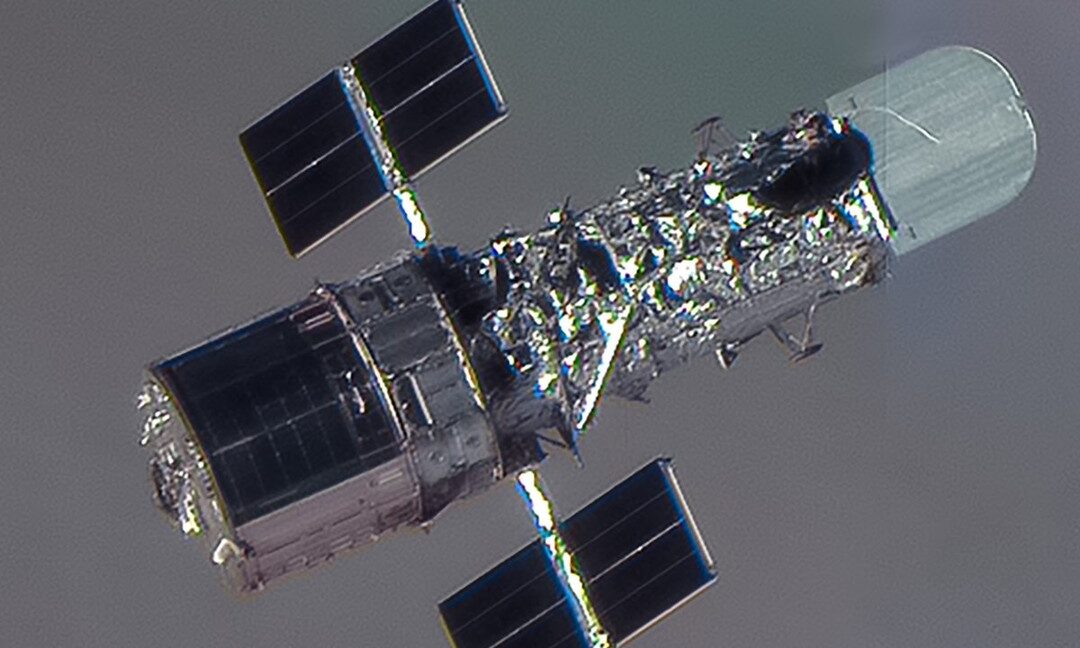
NASA has released a Request for Information asking commercial companies for ideas to reboost, service, or perform a controlled disposal of the Hubble Space Telescope. Responses are due November 30.
The agency wants to know whether companies can capture Hubble, raise its altitude to at least 373 miles (600 km), improve its performance, or guide it to a controlled reentry. NASA wrote that any boost or servicing mission "must not harm the HST" and is expected to occur by 2032. The contractor would provide the launch vehicle, servicing spacecraft, mission operations, and "crew if applicable."
NASA is not committing to buy a rescue mission, and it currently has no funding allocated for one. Officials want to learn who might pursue such a mission, what it would cost, and which companies could realistically reach Hubble before it reenters.
According to the report, orbital dynamicists predict Hubble will likely reenter in 2033 or 2034 without intervention, though forecasts can change with solar activity. Hubble has no onboard propulsion and last had its orbit raised in 2002, during a Space Shuttle Columbia servicing visit.
The report notes that NASA issued a similar request in 2022, received eight responses, and decided in 2024 not to pursue a reboost. Mark Clampin, then head of NASA's astrophysics division, said proposals from Jared Isaacman and SpaceX "were really just notional concepts."
Isaacman, now NASA administrator, said in a NASA statement: "Hubble still has important science ahead of it, and we should be looking at every reasonable opportunity to keep it delivering for as long as possible." The report also cites NASA's 2025 Swift rescue effort, in which contractor Katalyst Space Technologies received a $30 million contract and nine months to attempt a mission. Katalyst got within about 6 miles (10 km) of Swift before ground teams halted the approach because of power and reaction control problems.