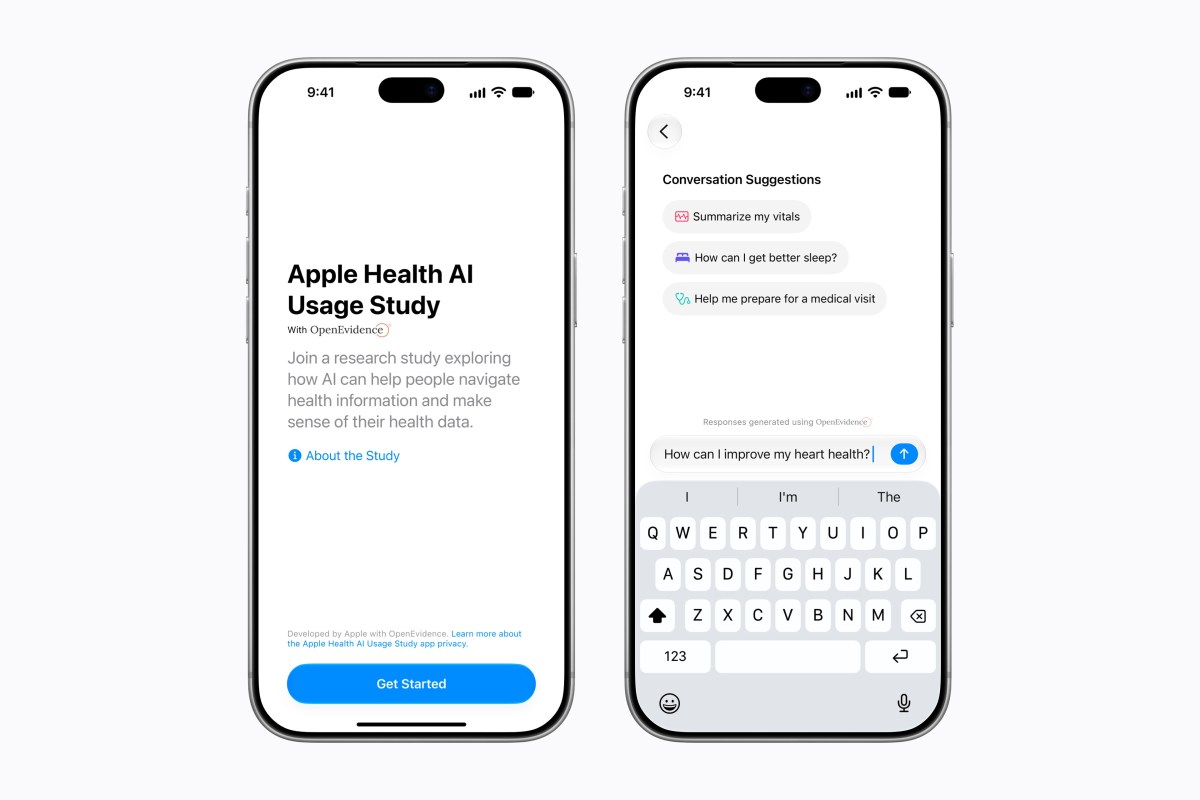
Apple has launched a new app that lets U.S. users ask health questions and receive answers grounded in clinical sources, including The New England Journal of Medicine, the Journal of the American Medical Association, and Nature. The company says the app is part of a study aimed at understanding how people use AI for health, and it plans to enroll up to 200,000 participants for more than 12 months. The framing is careful, and that is worth noticing. Rather than racing to add a chatbot to its Health app or Siri, Apple is presenting the product as research.
The clinical grounding is the most useful part of the pitch. Chatbots from OpenAI and Anthropic have drawn attention for answering medical queries, and the report notes that OpenAI said users were asking over 300 million health-related queries each week. Tying answers to peer-reviewed journals is a meaningful attempt to make those answers more trustworthy. Still, citing reputable sources does not guarantee that a simplified answer is accurate or appropriate for a particular person, and the study exists partly to find out how users actually interpret what they receive.
The privacy commitments deserve closer scrutiny than the marketing allows. Apple says participants can share HealthKit data, including resting heart rate, sleep, activity, and lab results, and that the data will be anonymized before going to a secure third-party cloud provider. It also says the data will not be used to train AI models, and that OpenEvidence deletes query and response data after 24 hours. Those are concrete claims, and they should be held to account. Anonymization of health data is hard to guarantee, and users would be wise to read the terms closely rather than rely on a company's assurance.
The study design raises its own questions. Participants must be over 21, use an iPhone 15 or later, run iOS 26 or later, and have Apple Intelligence enabled, which already narrows who can take part. Users will rate answers and complete monthly surveys, so Apple will gain a steady stream of feedback on how people judge health AI. That is valuable research, but it also means participants are effectively contributing to a product's development while seeking medical information. Apple should make clear what happens to survey responses and ratings, and it should publish findings in a form that independent researchers can examine.
Apple is right that responsible health AI needs scientific rigor, and the company deserves credit for not pretending the technology is ready for unsupervised medical advice. The real test will be whether the study produces results that are shared openly, whether the privacy promises hold up under scrutiny, and whether the app consistently points people toward doctors when their concerns are serious. Until those things are demonstrated, the most sensible reading of this launch is cautious optimism.