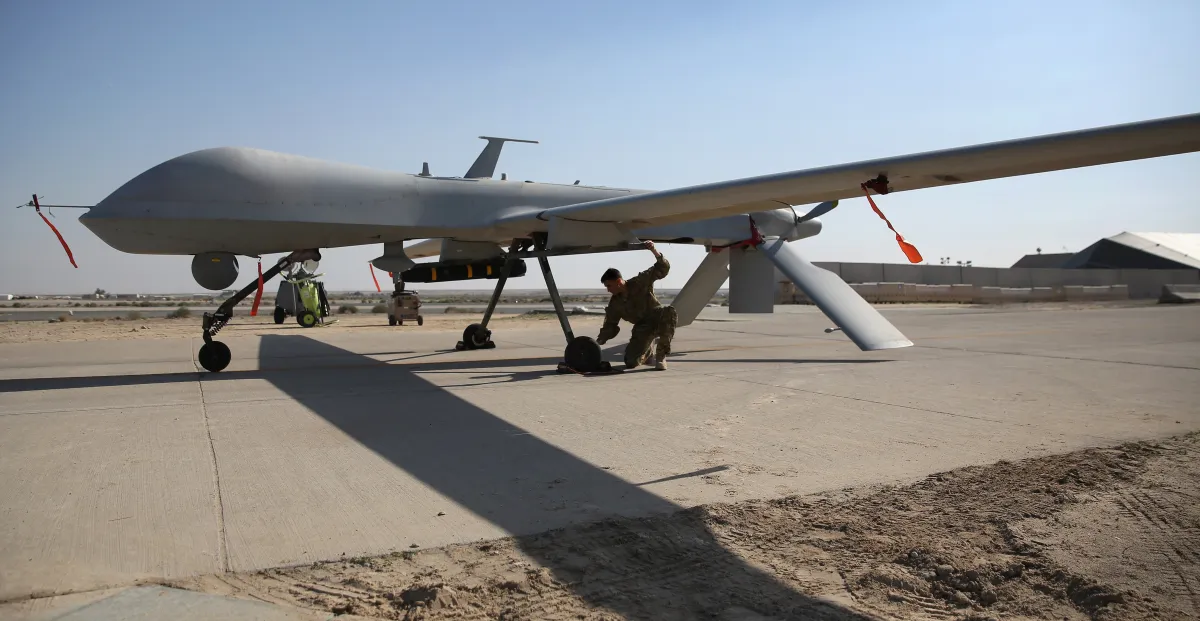
The United Nations has once again chosen discussion over decision. After a largely fruitless week of negotiations in Geneva, representatives agreed only to "start discussing options" for rules governing autonomous weapons, the so-called "killer robots." For a technology that machines are already being used to deploy, that is not progress. It is a delay dressed up as diplomacy.
The ask on the table was modest by the standards of international law. The International Committee of the Red Cross, the guardian of the Geneva Conventions, said legally binding rules should be drafted within a year. The U.N. secretary-general and Pope Leo backed that call. What came back was a compromise giving countries two years to propose regulations, with negotiations on which rules to adopt and how to enforce them likely to run well beyond that. Some of the yet-to-be-adopted regulations may also remain optional.
The stakes are not abstract. The report notes that semi-autonomous weapons and drones have been responsible for a significant number of civilian deaths in conflicts in Ukraine, Gaza, and Sudan. Humanitarian organizations and some countries are right to see urgency here. Every year without binding limits is a year in which the rules of engagement for these systems are written by whoever fields them first.
The report, citing NPR, identifies Russia, Israel, and the United States as the main obstacles. Russia delayed proceedings on the first day by objecting to the meeting's agenda. The United States then proposed a five-year window to discuss nonbinding, optional guidelines. Optional guidelines are not rules. A country that wants a constraint can always choose to ignore a guideline it never agreed to be bound by, and the nations most capable of building these weapons are the ones with the most reason to prefer that arrangement.
Countries that want meaningful limits should stop accepting timetables that let the question outlast the conflicts it is meant to govern. The next step should be a clear, binding framework with a firm deadline and an enforcement mechanism, pursued even if some states refuse to join at first. A treaty with fewer signatories but real commitments is worth more than a consensus that commits no one to anything.