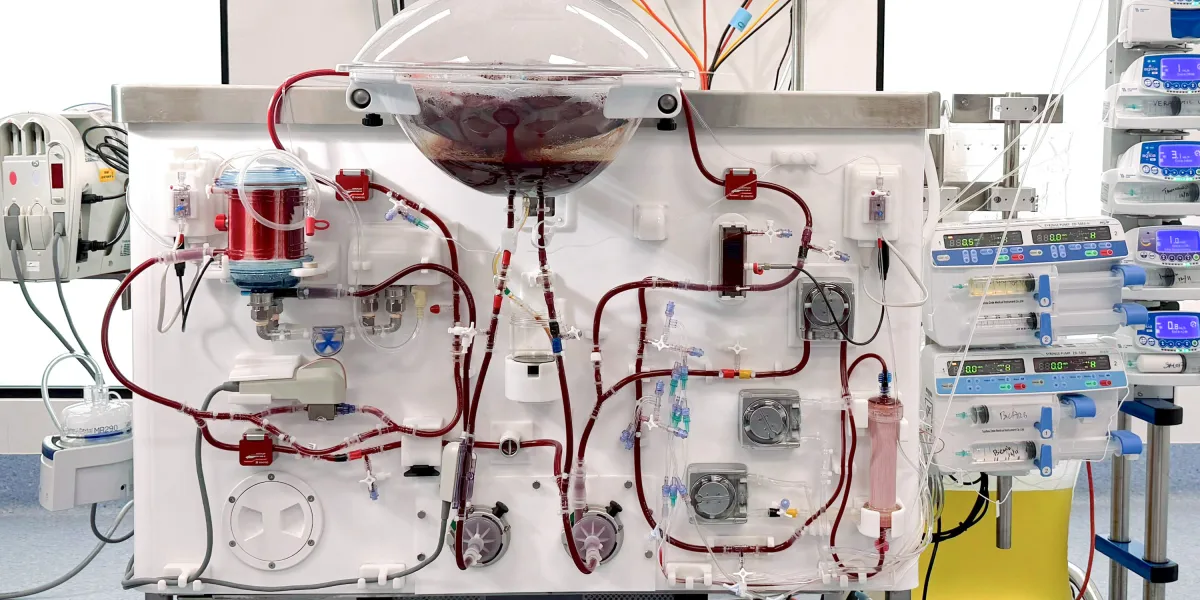
Researchers in Sydney say they kept a human liver alive outside the body for seven weeks, according to MIT Technology Review. The team, led by transplant surgeon Carlo Pulitano of Royal Prince Alfred Hospital and the University of Sydney, connected a donated liver to an automated system of pumps and sensors called the Extended Organ Perfusion System. The organ was kept at body temperature, about 37 °C.
Pulitano told the publication, "Our group is the only one in the world to have maintained a human liver under fully normothermic, physiological conditions for seven weeks." The details of the work are pending formal publication. The article reports that the previous record for an internal organ kept alive outside the body was set in Switzerland and lasted about two weeks.
According to the report, Pulitano credits automation for the result. The team described perfusing 55 human livers in a meeting in Switzerland earlier this year. For livers on the automated system, average survival time tripled to about four weeks. The report states that perfusion can roughly double the time an organ can be held before transplant, compared with traditional ice storage of a few hours.
Transplant doctor Paulo Martins of the University of Oklahoma told the publication that about half the kidneys he transplants are now perfused, which can add $100,000 to the cost of a transplant. Waldemar Hoffmann, CEO and cofounder of Apersys, said people in the field believe the record is real but do not know how healthy the organ was at the end. He said, "The key question is what the purpose for a seven-week perfusion would be."
The report also describes possible research uses, including growing new organs, testing drugs on human organs, and studying gene therapies. These remain proposals discussed by the researchers and are not established results.