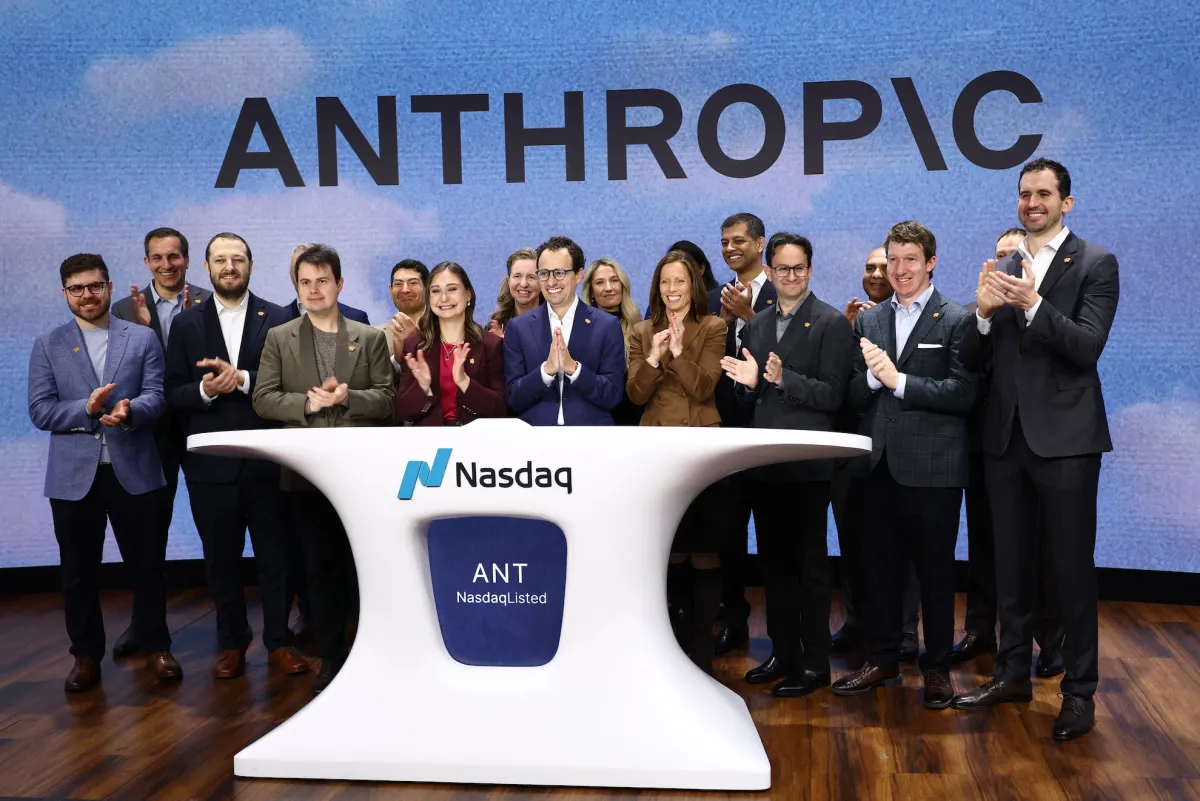
Notable Capital's bet on Anthropic looks brilliant in hindsight, and the report makes clear why the firm was willing to take it. According to the account, Notable put roughly 10% of the U.S. portion of its $1 billion-plus fund into Anthropic's Series E at a $61.5 billion valuation, even as limited partners were perplexed. Managing partners Hans Tung and Glenn Solomon and principal Dan Cahana reportedly found that developers were using Claude 70% of the time, a reversal from the previous year. Watching where developers actually work is sound venture practice, and Notable deserves credit for acting on it.
The report says Anthropic raised $81.3 billion in an IPO at a fully diluted valuation of about $1.5 trillion, a paper return of roughly 15 times. Those figures are striking, but they also expose a problem. The gains described flow mostly to the firms that bought in early, including Notable, GIC, and Baillie Gifford, and to other backers who invested at what once seemed like astronomical valuations. GIC's own stake is described as about 1% after the IPO, based on a person familiar with its financials. Ordinary public investors buying into a $1.5 trillion company on its first day of trading start from a very different position.
GIC and Baillie Gifford tell a similar story of patient diligence. GIC reportedly began researching Anthropic throughout 2024 and invested more than $4.5 billion across three rounds. Baillie Gifford invested $1.5 billion across three rounds after studying the company for nearly two years. Their conviction was grounded in observable things, such as consistent execution, rising enterprise adoption, and what the report calls compelling gross margins. Long-horizon diligence of this kind is precisely what the public market reward for early risk is supposed to recognize.
Still, the report's framing leans toward celebration without asking hard questions. Notable's argument that mission-critical work would always require U.S.-based, closed-source models is presented as foresight, yet it is also a claim that favors concentrated, closed platforms. Regulators and policymakers should examine whether a handful of AI labs, financed largely by a small circle of sophisticated investors, can set the terms for enterprise and government reliance on the technology. The report does not address that governance question at all.
The next step should be closer scrutiny of how these rounds were structured and who ultimately benefits. Disclosure of early-stage terms, clearer information for retail buyers in the IPO, and a public conversation about whether AI infrastructure should remain this concentrated would serve the wider market better than another victory lap. The investors deserve their returns. The rest of the economy deserves a say in whether the next trillion dollars of AI value is distributed as narrowly as the first.