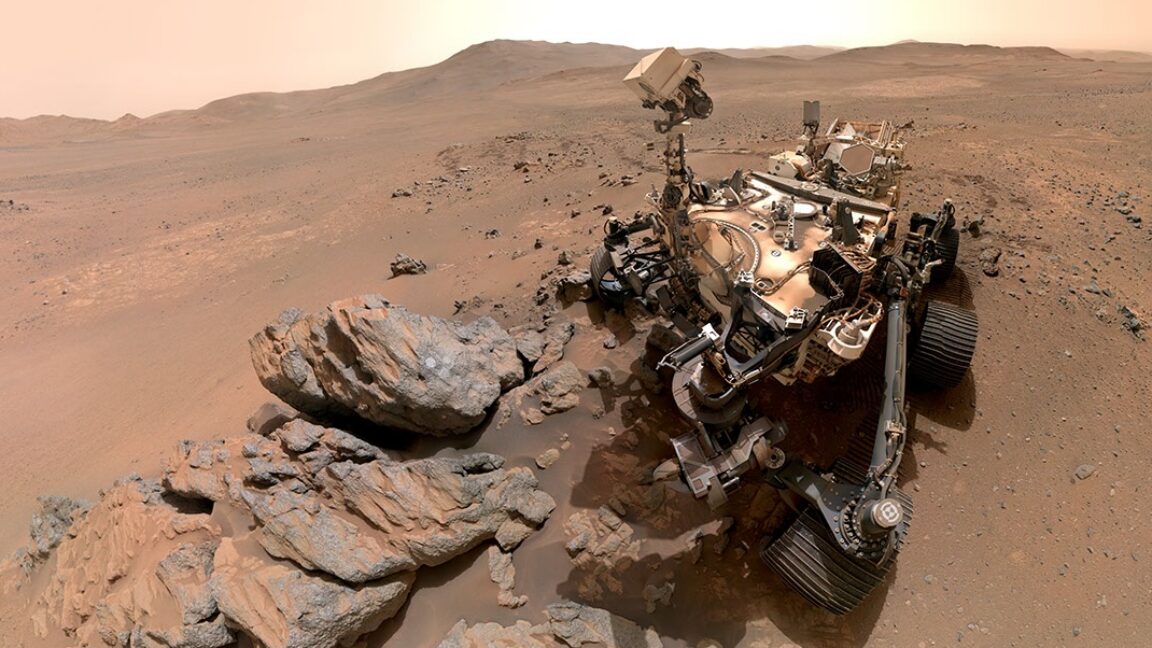
Two of NASA's four operating Mars missions have suspended science work, and the reasons are different but equally worrying. Perseverance, the rover in its sixth year on the surface, has been unable to rely on its high-rate UHF radios since one failed to respond when it powered up on October 30. The backup radio is transmitting at about half its expected power, and the team has stopped using both until it can find the cause. The rover now falls back on a much slower direct-to-Earth X-band link, and NASA says it hopes to resume science by the end of November.
The Odyssey orbiter is in a more serious position. One of its four reaction wheels stopped spinning in early November, following an earlier failure in 2013. With only two working wheels, the spacecraft must rely on its hydrazine thrusters to stay oriented, and NASA estimates the remaining fuel could last one to two months. Earlier optimism that the orbiter could run through 2028 assumed no further wheel failures, an assumption that has now been overturned. Some initial troubleshooting of the stalled wheel has shown promise, but whether it can be recovered is still unknown.
These failures matter because the fleet is thin and aging. Odyssey is one of only four orbiters relaying data for Perseverance and Curiosity, and the others are also old, including Mars Reconnaissance Orbiter from 2006 and Mars Express at 23 years. NASA already lost MAVEN last December after a spin caused by faulty orientation data. Each loss leaves fewer relay links and less redundancy, and the agency has been relying on hardware far beyond its original design lifetime without a clear replacement in place.
The replacement plans are promising but slow. Blue Origin's $700 million Mars Telecommunications Network contract would not deliver an operational orbiter until 2030, and it is currently on hold while the Government Accountability Office considers Rocket Lab's protest, with a ruling expected next month. NASA also wants to replace the aging Mars Reconnaissance Orbiter's high-resolution camera, but officials describe that effort as in its very early stages with no firm schedule or budget. NASA should treat that gap as urgent. It should resolve the protest quickly, fund the imaging replacement, and publish a clear contingency plan showing how relay coverage will be kept if Odyssey's fuel runs out. Waiting until the next failure makes the choice for them.