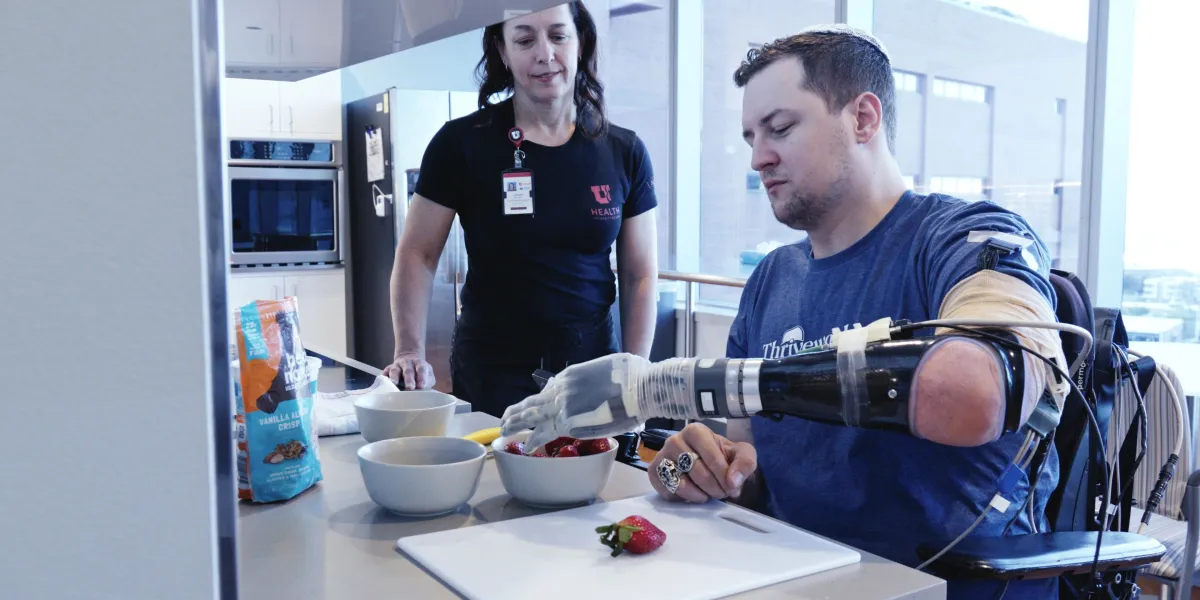
A bionic hand that connects directly to nerves in the arm is being tested in a clinical trial run by the University of Utah. Alexander (Avi) Davidson, a trauma therapist who was paralyzed and lost his left hand in a teenage injury, is taking part. He is the ninth person to trial the technology and the first to take it home and use it independently, for tasks such as drinking from a cup and writing.
Davidson has used about seven prosthetics in the 17 years since his accident. He had surgery to implant electrodes in his arm, and will need another surgery to remove them. He will not keep the device long term. He told the reporter: "I am not going to benefit from this … I wanted to be a part of this in the context of being able to help push the technology forward."
According to the report, the research team hopes to learn how the device performs outside the lab, what people use it for, and where it can be improved. Davidson has found that the prosthetic wrist can feel sore and stiff after overuse, and that stretching relieves the feeling. The report says no one yet knows why.
Scientists also do not know whether Davidson's brain will change from using the device. Before the trial, they took brain scans to map how his missing hand is represented in his brain. The report says the team will look at whether that changes, and what it might mean for people born without limbs.
Davidson will have the device until at least late January 2027, and possibly for another year. The report says the device's future after that depends on research progress, Davidson's condition, and funding, so how long it can last in a body is unclear.